Beyond the stroll: Why adding challenge to your walk builds real strength
07/04/2026 / By Ava Grace

- Walking requires supportive shoes and can be easily integrated into a daily routine (e.g., a 20-minute morning commute, 30-minute lunch walk and 50-minute evening stroll).
- It strengthens core muscles, improves circulation and promotes joint flexibility as a low-impact activity. It is presented as a potent “medicine” that balances hormones, reduces inflammation and aids digestion.
- Flat, steady-state walking builds muscular endurance but not the muscular strength needed for tasks like rising from a chair. To build strength, the walk must be upgraded beyond simple volume.
- Walking can be transformed into a strength-builder by: 1) adding incline (hills or 2-4% treadmill grade); 2) using intervals (e.g., 30 seconds fast/30 seconds easy); 3) performing hybrid walks (stopping every 5-10 minutes for squats, lunges or calf raises); and 4) walking on unstable surfaces (trails with rocks or sand) to train stabilizing muscles.
- Muscle is built during rest, not the workout. Limit muscle-focused walks to 2-3 times per week with easier walks or rest days in between. While walking volume is more beneficial than intensity for overall health, building strength requires intentionally challenging the body.
The beauty of walking as preventive medicine lies in its universal accessibility. Unlike costly gym memberships or intimidating workout regimens, walking requires little more than supportive shoes. The target of 100 minutes can be seamlessly integrated into your day, such as a 20-minute morning commute, a 30-minute lunch walk and a 50-minute evening stroll.
From a physiological perspective, walking strengthens core muscles, improves circulation and promotes joint flexibility. It is a low-impact activity that nourishes the body without the strain of high-impact exercises. Exercise stands out as one of the most potent “medicines” available—far more effective than many prescription drugs. A 2013 study published in the British Medical Journal demonstrated its superiority over frequently prescribed medications. Movement is life; without it, you are effectively ceasing to live. Beyond nutrient delivery and detoxification, exercise balances hormones, reduces inflammation and bolsters immune function. A short walk after meals greatly aids digestion.
The historical context of the walking boom
For decades, the act of walking has been championed as a cornerstone of public health. The 1996 Surgeon General’s report democratized physical activity, making walking the nation’s default prescription. This was a massive public health victory. However, the emphasis on frequency over intensity inadvertently created a gap. The human body adapts to repetitive, low-load activity by becoming more efficient but not necessarily stronger. A flat, steady walk provides insufficient mechanical tension to trigger significant muscle growth.
The problem of muscular endurance vs. strength
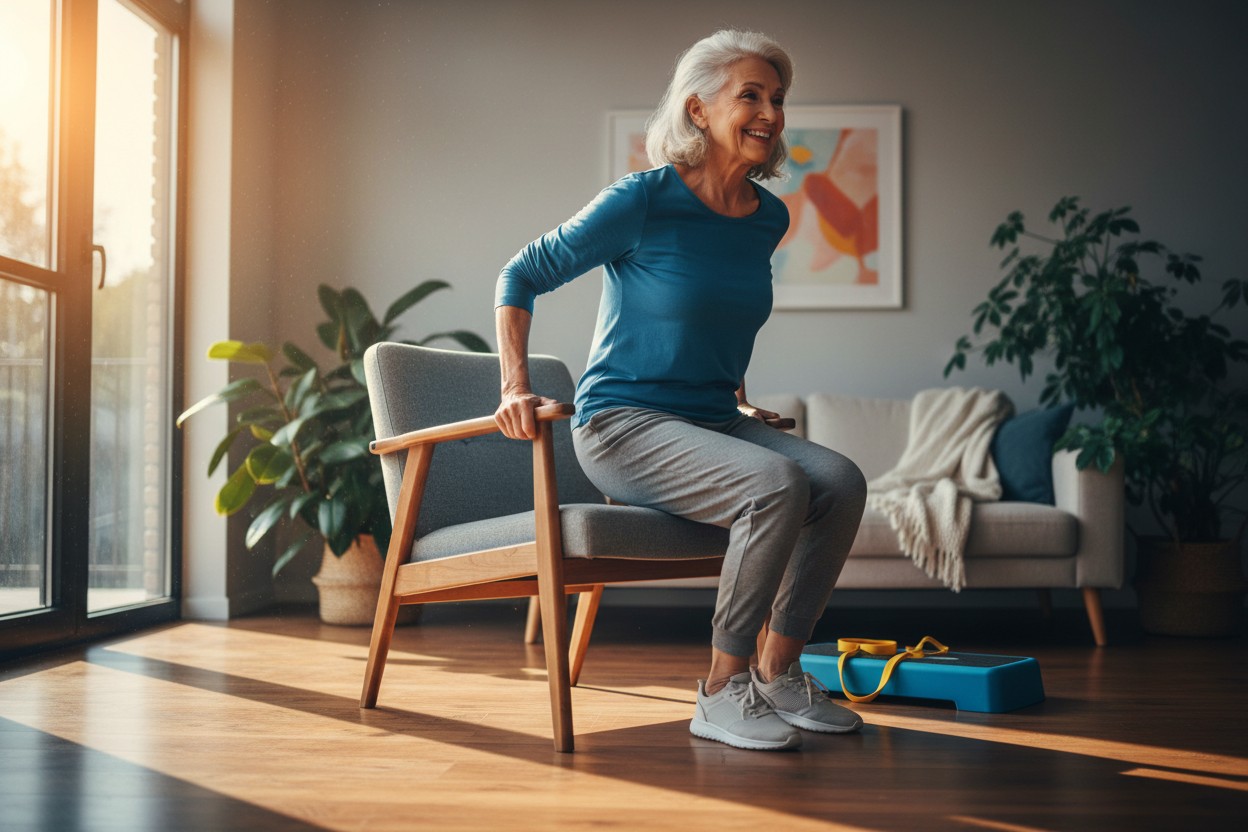
The research makes a critical distinction: a flat walk trains endurance, not size or strength. Muscular endurance allows you to walk miles without tiring. But muscular strength—the ability to generate force—is what allows a senior to rise from a chair without using their arms. The steady-state walker is leaving strength gains on the table. The solution is to make your walk work harder.
Method one: The power of incline and stairs
The first method to transform a walk into a strength-builder is to change the angle. Adding an incline—whether by walking up a hill or setting a treadmill to a 2 to 4 percent grade—dramatically increases demand on your glutes, hamstrings and calves. This increased mechanical stress triggers muscle protein synthesis, the biological process that repairs and builds muscle tissue. Awakening dormant glutes with an incline walk is a profoundly necessary act.
Method two: The interval structure
The second method involves altering the timing of exertion through intervals. Instead of a consistent pace, alternate short bursts of high effort with periods of recovery. A simple pattern involves 30 seconds of a quick pace followed by 30 seconds of an easy pace. This recruits fast-twitch muscle fibers critical for power and strength that are neglected during slow walking. The body must be asked to do slightly more over time to continue adapting.
Method three: The hybrid walk
The most pragmatic technique for a busy schedule is the hybrid walk, which combines walking with bodyweight exercises. Stop every five to 10 minutes to perform squats, lunges or calf raises. This forces your muscles to handle resistance in multiple planes of motion. A squat at the midpoint of a walk adds a strength stimulus that walking alone cannot provide, turning a walk in the park into a full-body circuit.
Method four: The unstable surface
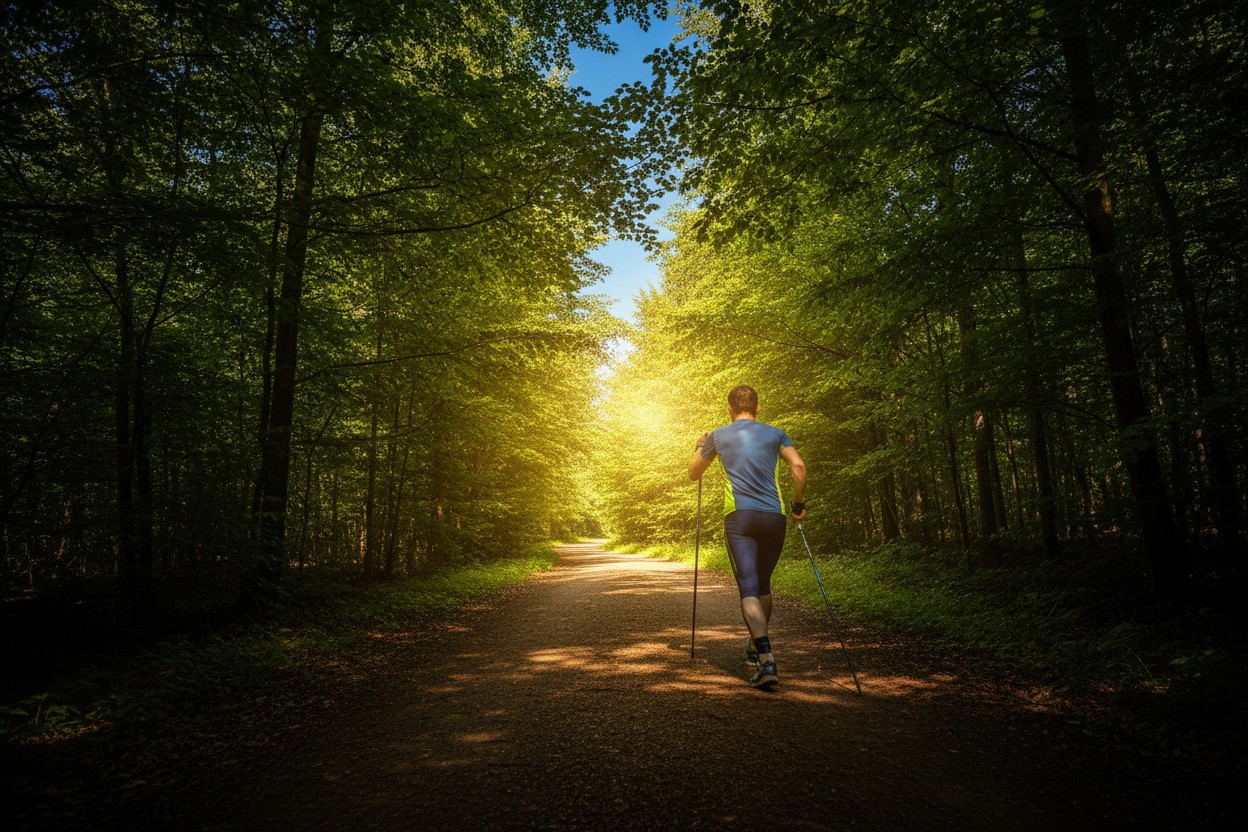
Walking on different terrain addresses the vital component of muscle function: stability. Trails with rocks, roots or sand activate the smaller stabilizing muscles of your feet, ankles and core. These muscles are often ignored on a flat sidewalk. While less targeted than a squat for building bulk, stability training is essential for preventing injury and building a functional, resilient body.
Method five: The recovery paradox
Finally, a critical warning about recovery: muscle is not built during the workout but during the rest that follows. Turning every walk into a hard workout leads to fatigue and overuse injuries. The body requires time to repair microscopic tears in muscle tissue. The recommendation is to limit muscle-focused walks to two or three times per week, allowing for easier walks or complete rest days in between.
“Walking is important because it is a simple yet powerful form of exercise,” said BrightU.AI’s Enoch. “It demonstrates that even a basic, accessible activity can deliver significant health benefits. Ultimately, walking serves as a key example of how regular movement is vital for overall well-being.”
The simple act of walking remains a great public health achievement. But the fight against age-related muscle loss requires more than just clocking steps. To build and preserve muscle mass essential for a healthy weight and an independent old age, the walk must be upgraded. By adding inclines, embracing intervals, mixing in bodyweight exercises and honoring recovery, the average walker can reclaim lost strength. The goal is not to abandon the path but to make it harder. Research concluded that walking volume has a more pronounced benefit than walking intensity for overall health, but to build strength, you must challenge your body.
Watch and discover the health benefits of walking.
This video is from the Natural Cures channel on Brighteon.com.
Sources include:
Submit a correction >>
Tagged Under:
aging, alternative medicine, circulation, endurance, exercise, fitness, flexibility, heart health, muscle, natural cures, Naturopathy, physical activity, research, strength, walking
This article may contain statements that reflect the opinion of the author
RECENT NEWS & ARTICLES